When Fiction, Facts and Family Intertwine
My mum was a writer – she always wrote. And she always wanted to write a book. As a child she wrote stories for her younger siblings, creating an ongoing tale called The Mystery of the Disappearing Horses. She would read each instalment aloud before leaving her audience eagerly awaiting the next chapter which had yet to be written. When we migrated to Australia, she wrote a series of articles about life in our new home which were published in a British newspaper. She wrote short stories and poetry that were published in magazines and anthologies and later wrote a local Tasmanian history book – Bruno: A Bull and His Island (2005).
This Sandy Earth
The following is part of the blurb for the back of a novel written by my mum, Christine E. Lucas:
“A paragraph in her daughter’s history book that spoke of the shipwreck of the Rockingham said ‘little is known about the week the migrants spent in the storm on the beach, except one paragraph written in a letter 50 years after the event…’ Thus a story was born…”
It wasn’t until I read this recently that I realised that it was one of my schoolbooks that inspired my mother, in the 1970s, to dedicate years of her life to researching and writing a historical romance.
Mum’s book, This Sandy Earth, is set against the dramatic voyage of the Rockingham and the early years of the Swan River Colony. It tells the story of Elizabeth Swann and her family as they journey from England to Western Australia in 1830. The novel explores the courage, hardship, heartbreak and hope of those who risked everything to build new lives in a distant land.
Although the central characters are fictional, the voyage of the Rockingham and many of the historical events are based on meticulous research undertaken by Mum in the State Library of Western Australia.
Finding Time to Write
With the wisdom of age and experience as a working mother, I can look back at the seventies through different eyes now. My siblings and I would come home from school, usually starving after an active day, and mum would be sitting at her typewriter which was on the dining room table with stacks of paper and research books spread about.
Mum always put us kids first, but I remember the disappointment in her eyes at times, and could almost hear her thinking, “If only I had another hour or two to myself to continue writing.” But she needed to move from the 1830s to the 1970s, from the dining room to the kitchen, from the adventures in her head to the fridge and pantry to prepare afternoon snacks for us all.
Mum would often get up around 5.00 am so she could spend time with her characters before she started dealing with the everyday life of a “modern” wife and mother. My youngest brother wasn’t yet school age, and I think there was a fair bit of judgement of her when she decided to put him into daycare for one or two days a week so she could have more writing time. After all, it wasn’t a “real job”. My dad didn’t judge her. He was always very supportive of her writing. One of the books he bought her during those years, Early Swan River Colony by Mary E. Calder, is still on my bookshelf today. Inside he wrote simply, “To Chris. All my love. Keith.”
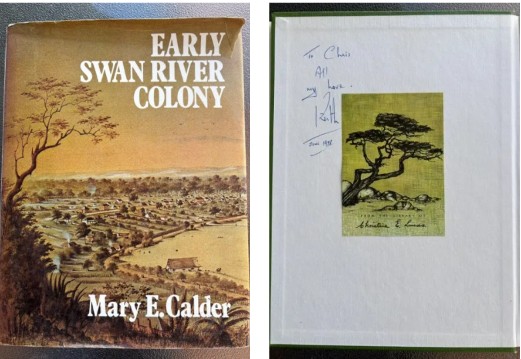
Mum needed time to research as well as write and, in those days, that meant getting the bus into Perth to visit the State Library of Western Australia and scour the reference books that she wasn’t able to check out of the library.
The process of completing her book took many years and I remember how happy Mum was when she finally typed the words, “the end”. She sent it off to a publisher but, like so many aspiring authors, it was a rejection letter she received some time later.
Although disappointed, mum reviewed and revised her novel, again over many years. I’m thankful that decades later, when she eventually bought a computer, she had it retyped, giving her, and us, a digital version of the book.
Family History Research
Now, let’s fast forward to the early 2020s. By this stage, I am researching my family history and I wanted to research my husband Trevor’s family history as well. After all, his ancestors are also the ancestors of my children and grandchildren.
I bought us all Ancestry DNA kits as I was keen to learn about our ethnicity origins and see how DNA matches could help us build the story of us. My husband’s origins, whilst predominantly Scottish and Irish, showed two very interesting Journeys – South Australia, European & British Settlers, and, Western Australia, European & British Settlers. It was when I looked at his DNA matches who were showing common ancestors that I discovered that Trevor’s 4 x great-grandparents were William and Hannah Leeder, who arrived with their five children on the ship Rockingham in 1830.
So, whilst my mum had created a fictional family that boarded the Rockingham, my husband, children and grandchildren had actual ancestors who took that journey. Of all the ships that arrived in the early days of the Swan River Colony, it was amazing that the Rockingham became a central character in all our lives.
The Leeders
William (1797-1845) and Hannah Emily Leeder, nee French (1797-1889) were both born in Bury St Edmunds, Suffolk, England. They had six children in England, and sadly one son died as an infant. After they arrived in Australia, they had six more.
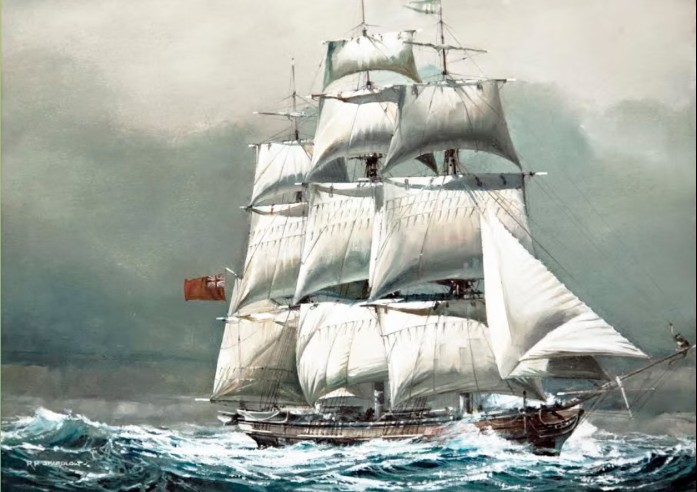
The Rockingham arrived in the Swan River Colony on 14 May 1830. The Swan River Colony was the original British settlement that eventually grew into the state of Western Australia. It was far from a smooth arrival. As the ship approached Garden Island, she was driven onto a reef and wrecked just offshore. Although the passengers and crew survived, they spent about a week camped on the beach while their belongings were salvaged. Today, the nearby mainland suburb of Rockingham commemorates the ship’s name.
The Peel Settlement Scheme
The Rockingham was the third of the three ships chartered by Thomas Peel as part of his failed settlement scheme. The other ships were the Gilmore, which arrived on 15 December 1829, six weeks later than the deadline given for Peel to secure his prime land grant near the Swan and Canning Rivers, and the Hooghly, which arrived on 13 February 1830.
Peel had encouraged others to join him on what was supposed to be a prosperous adventure in a new land. He was bitterly disappointed in having to change his plans and accept a land grant further south. Around 500 people arrived on these three ships. The adults had signed up to Peel’s scheme and came, bringing their children, capital, animals, equipment, tools, furniture, and other household goods. Their aim was to create new lives for themselves and their families. What they arrived to however, was not what they were promised when they were excited by Peel’s promises and caught “Swan River fever”. They were promised a land of opportunity, but they could not have imagined how hard taking advantage of that opportunity would be.
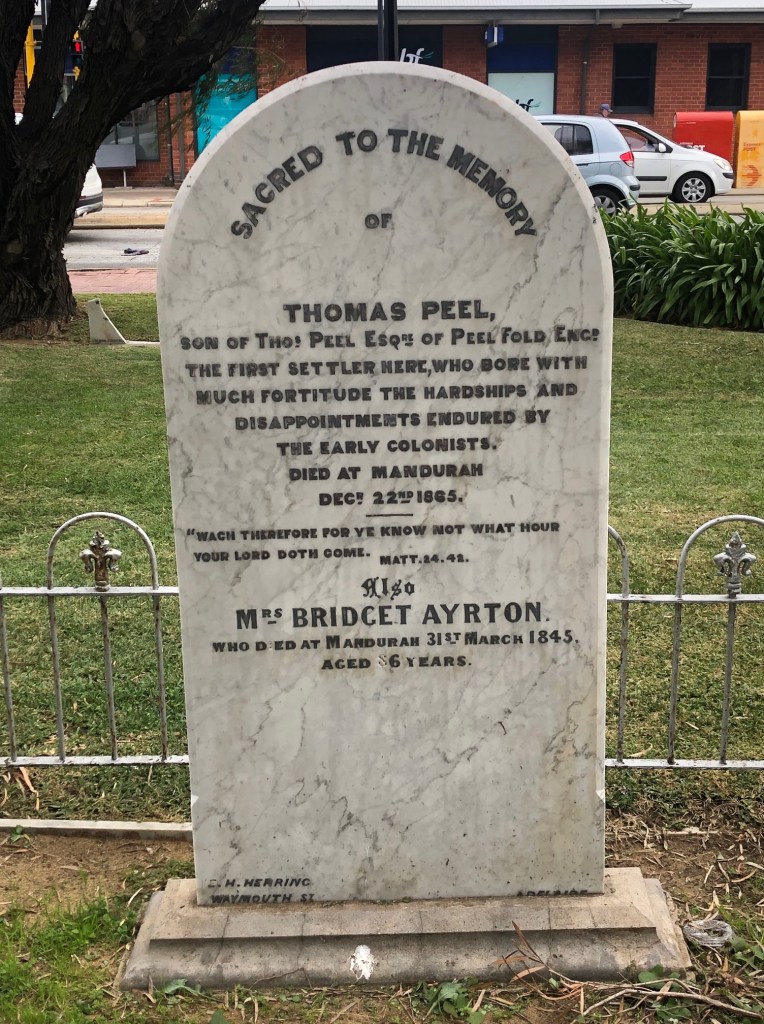
Thomas Peel’s settlement scheme failed, and many of those who invested their hopes and fortunes in it endured enormous hardship. Yet the inscription on Peel’s own grave takes a surprisingly compassionate view, remembering him as one “who bore with much fortitude the hardships and disappointments endured by the early colonists.”
William Leeder, the Farmer and the Publican
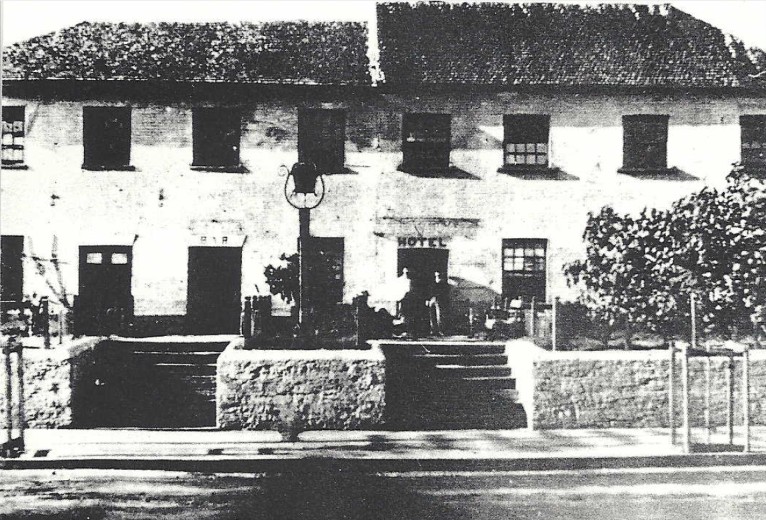
Despite a rough beginning, the Leeder family established farms just north of the city of Perth, in an area that now bears their name – Leederville. William Leeder also took over a land grant on the corner of St Georges Terrace and William Street in Perth in 1831 and established the Leeder Hotel, which later became the Freemasons Hotel and, in 1896, the Palace Hotel.
It seems that William Leeder was a fine publican, as this contemporary news report shows. This passage is from an article that appeared in The Perth Gazette and Western Australia Journal (Saturday 24 August 1833) and is entitled, “Celebrations of the King’s Birthday”.
“The Dinner – The Public Officers dined together at Leeder’s Hotel. The Hon. J. S. Roe, Esq., Surveyor-General, in the chair, whose urbanity of manners and infinite good humour rendered the scene “the feast of reason and the flow of soul.”
The party, consisting of twenty-five, did not break up until a late hour, when, at the demand of old Father Time, it was with evident reluctance that the “sweet sorrow” of parting was yielded to.
A finer display of the gastronomic art could not have been made. Everything was of the best description and brought to table in a style which would not have disgraced a first-rate purveyor in London. The supply was abundant, and the attendance, no inconsiderable addenda on these occasions, was all that could be required. Leeder deserves every credit for the manner in which this dinner was got up, and his exertions we were pleased to find universally commended.” (Sourced via Trove)
Development in the 1980s
Another intertwining link in this story takes us back to the 1980s. I was working as a personal assistant to a project manager at Bond Corporation’s property division. Bond Corporation’s founder was Alan Bond – once seen as a hero for financing and heading the sailing syndicate that won The America’s Cup in 1983, he was later deemed a villain and put in prison when many of his shoddy business deals were revealed. But I digress. This was still the era of Alan Bond being a leading Western Australian business figure.
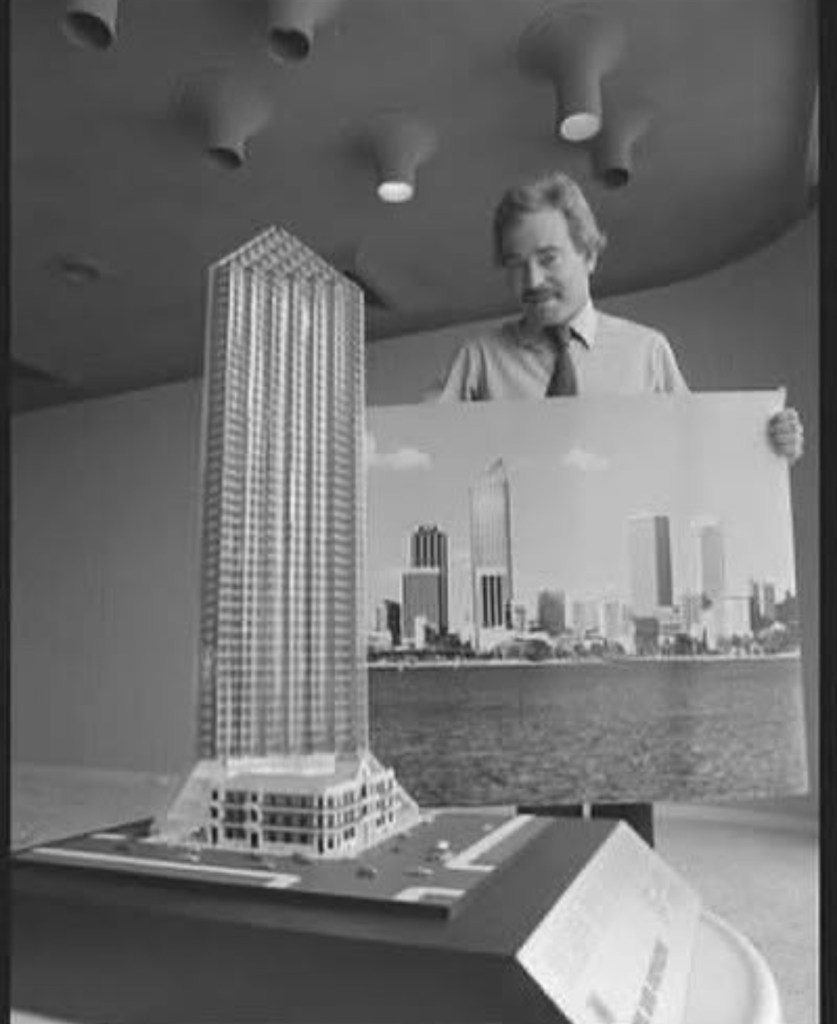
One of the projects we were working on at the time was the redevelopment of the site on the corner of St Georges Terrace and William Street – the Palace Hotel. It involved retaining the facade and part of the hotel and integrating it into a new building, the R&I Tower.
The to-scale model [see photo below] sat on a table in the reception area of our West Perth office, and I walked past it each day as I headed to and from my desk. I also drove to the site often when the Palace Hotel was still operational. I was usually dropping off or picking up the company executives who held regular business meetings there in a private room. Little did I know that my husband’s 4 x great-grandfather once owned that site and the original hotel that sat on the land.
The Swan River Pioneers Association
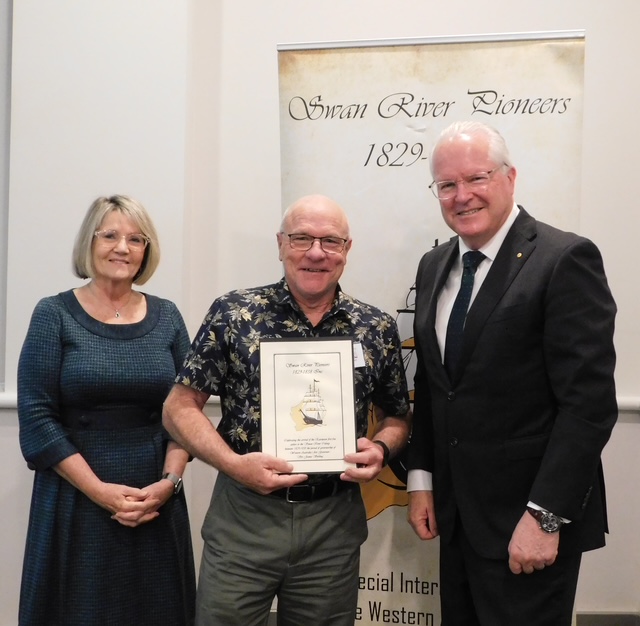
Trevor and I are now members of the Swan River Pioneers Association, and on Saturday 6th July, 2026, we attended their WA Day breakfast. Trevor was one of several guests presented with their Certificate of Descendancy by His Excellency, the Honourable Chris Dawson AC APM, Governor of Western Australia and his wife, Mrs Darrilyn Dawson.
I was so happy that the research I conducted, and the DNA sample, of course, proved Trevor’s link to one of the most prominent settler families in Western Australia.
Reflections
We have a saying in Perth, taking the widely accepted Kevin Bacon related phrase about there being “six degrees of separation” to a different level. Here we say, “there are two degrees of separation in Perth”. Throughout my life and career, I have always found this to be true.
And, it’s not just in the people we know and meet. It seems to be true in this case as well. In the 1970s, my mother wrote a historical novel that included a fictional family who arrived on the Rockingham. In the early 1980s, I married a man whose ancestors arrived on the Rockingham.
In the 1830s and 40s, my husband’s ancestors owned the land and hotel that in the 1980s, the company I worked for developed.
In the 1990s, I gave birth to descendants of those who arrived on the Rockingham and in the 2020s, with the arrival of our grandchildren, our branch of the Leeder family tree grew a few more leaves.
Mum could never have known that twenty years after writing her novel, she’d have grandchildren, and fifty years after, great-grandchildren, with biological links to the passengers on the ship she used in her imaginary story.
I guess, to sum it up, all I can say is that this is “So Perth!”.
I’d like to thank Mum for the inspiration and encouragement to write my own stories. And I’d like to think that I inherited her storytelling gene.
Author’s Note
This article blends family memories with historical research. Historical information was drawn from contemporary newspapers available through Trove, records and publications of the Swan River Pioneers Association, the State Library of Western Australia, the book Early Swan River Colony by Mary E. Calder, information from the City of Vincent and the City of Rockingham, and my own family history research.
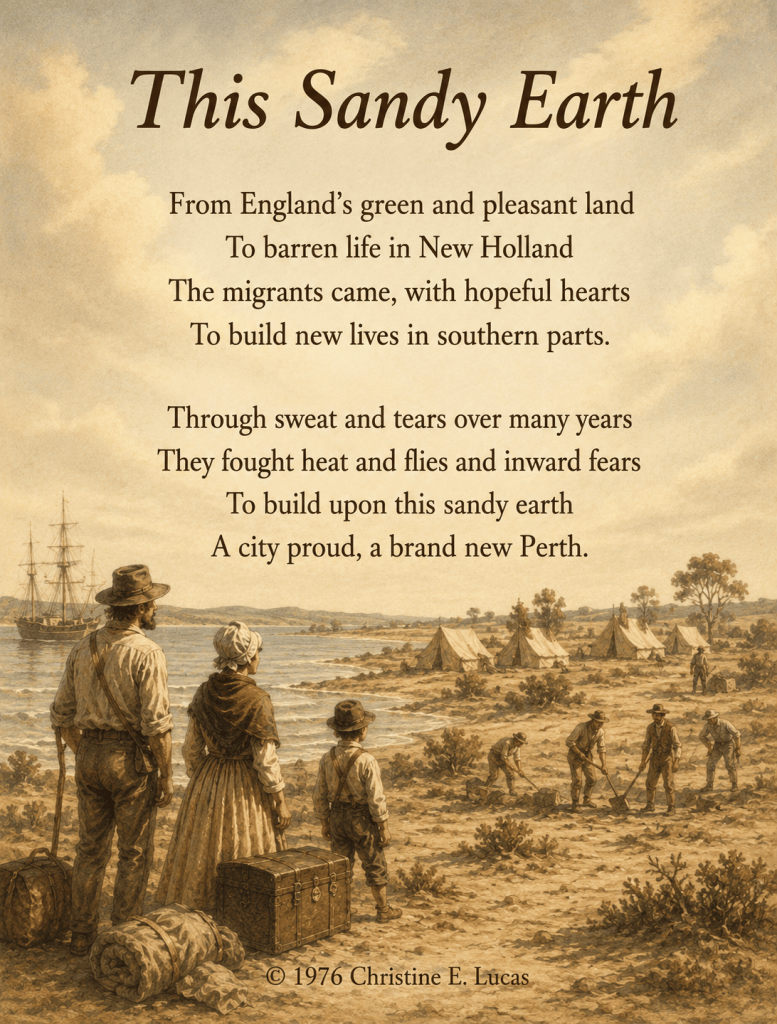
The novel This Sandy Earth (unpublished) and the accompanying poem were written by my mum, Christine E. Lucas, in the 1970s.

 Your Family Stories
Leave a comment